Skip Navigation Links.


1999 – 2009

Celebrating 10 years of achievements


Message from the Director General

                
The year 2009 marks a special year for the International Center for Biosaline Agriculture (ICBA). Ten years ago the Center was established in 1999 through major support from the Islamic Development Bank (IDB) and the Government of the United Arab Emirates (UAE).

The initial strategic choices of the Center were strongly influenced by a series of reviews of the water situation initiated by the IDB during the late 1980s and early 1990s.

The establishment of ICBA occurred in response to increasing concern about shortages of fresh water for agricultural as well as urban landscaping use, especially in the Middle East, North Africa and Central Asia. Since that time this concern has escalated throughout the world.

In the Strategic Plan covering the period 2000-2004, the Center’s stated mandate was to investigate the potential for the use of saline groundwater to alleviate this growing constraint, and to share this knowledge widely.

Over the last ten years, ICBA has achieved the following key achievements:

  • Expanded from two to more than two dozen research and developments projects, with more than half of them being undertaken in outreach locations with partners
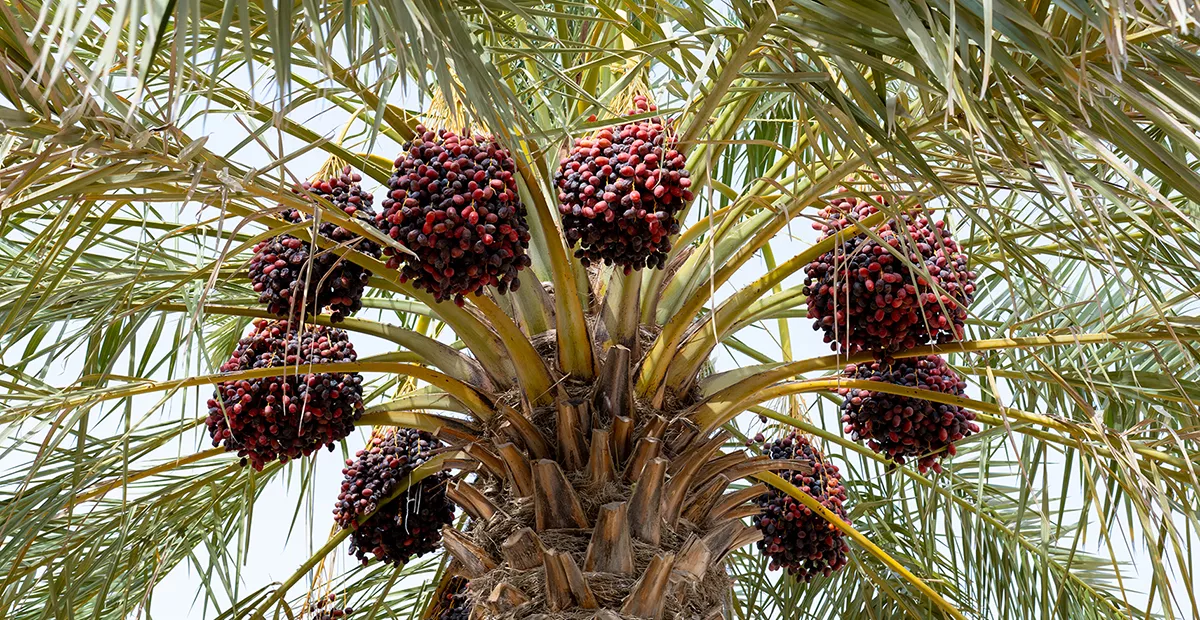
    • Working with the host country as partners on numerous projects ranging from the Abu Dhabi Water Master Plan, the Soil Survey in Abu Dhabi, the investigation of elite date palm for salt tolerance and forages for sheep and goats
    • Partnerships with IDB-member countries range from Central Asia and the Caucasus, through South Asia (Bangladesh and Pakistan), to the MENA region (Egypt, Jordan, Oman, Palestine, Syria, Tunisia, the UAE and Yemen) and the WANA region (West Africa and North Africa)
    • Partnerships with the private sector range from companies as diverse as the Petroleum Development of Oman, the Abu Dhabi Tourism Development, the National Prawn Company, Saudi Arabia, and Dubai Properties
  • Procured and conserved more than 9,415 germplasm accessions representing 221 species of forage and field crops from 134 countries
  • Attracted a significantly larger number of donors from both the private and public sectors, thus building on our major flagship support from the Islamic Development Bank
  • 850 individuals from 44 IDB-member countries trained, including 250 UAE nationals
  • Prepared for the future with an extensive consultation process with partners and stakeholders and subsequent formulation of a Strategic Vision leading to the Strategic Plan 2008-2012.

Incorporating feedback from partners, stakeholders and staff, the Strategic Plan 2008-2012 outlined our new mandate as being:

ICBA will help water-scarce countries improve the productivity, social equity and environmental sustainability of water use through an integrated water resource systems approach, with special emphasis on saline and marginal quality water.

To realize this vision, ICBA has replaced its existing programs with 3 programs:

  1. Integrated water resource system
  2. Marginal quality resources
  3. Capacity building and Knowledge-sharing.

The fourth program, Finance and Administration, an existing one, will continue to play an integral role in support and management to ensure an efficient business platform for ICBA’s scientific endeavors.

Plans for 2009 include the ongoing implementation of the ICBA Strategic Plan 2008-2012 and the continuation of ongoing contractual projects as well as in-house core projects.

The tradition established over the last ten years of ICBA working closely with its partners in national program, regional and international research centers, and development agencies will receive fresh impetus from the new Strategic Plan. Partners and donors have been critical components of the ICBA success story, and we look forward to continuing this essential relationship into the future.

Dr Shawki Barghouti
Director General


Mission Mandate   
ICBA’s mission is to demonstrate the value of saline water resources for the production of environmentally and economically useful plants, and to transfer its research results to national research services and communities in the Islamic world and elsewhere. ICBA will help water-scarce countries improve the productivity, social equity and environmental sustainability of water use through an integrated water resource systems approach, with special emphasis on saline and marginal quality water.


ICBA's key partners  
      National and public institutions
      Ministries of agriculture and water resources
      Universities
      Local, regional and international research centers
      Development agencies
      Private sector companies  


   Staff and facilities  

                                
ICBA is headed by
Dr Shawki Barghouti, Director General. The Center's Board of Directors includes nominees selected by the Islamic Development Bank and by our host country, the UAE. The Board of Directors reports to the Board of Trustees.

ICBA's staff represent a wide range of expertise, covering:
   Plant genetic resources 
   Irrigation and salinity management 
   Crop and forage agronomy 
   Halophyte agronomy 
   Soil and water resources management 
   Communications and networking
   Finance and Administration
cilities

ICBA is unique in having modern, sophisticated research and development facilities dedicated solely to the advancement of biosaline agriculture.


 History
                                
ICBA is an applied research and
development center located in Dubai, UAE. Its mission is to develop and promote the use of sustainable agricultural systems that use saline water to grow crops. The center, originally known as the Biosaline Agriculture Center, initially focused on forage production systems and ornamental plants in countries of the Gulf Cooperation Council and other parts of the Islamic world. The technologies we develop are, however, of global value and importance. Wherever farmers face problems of saline soils or irrigation with salty water, ICBA is here to help.        


The origins of ICBA date back to the late 1980s and the early 1990s, when scientists around the world started taking a greater interest in saline water and the possibilities of using it more productively. International conferences in 1990 at the Islamic Development Bank in Jeddah and at the UAE University at Al Ain concluded that an R&D center to promote biosaline agriculture in the Gulf region should be established.    
  
            
A series of expert consultations initiated by the IDB in 1992 outlined the objectives and activities of the new institute. In November of that year, the IDB Board of Executive Directors approved financing for start-up operations. The Bank commissioned an international consulting firm to undertake a detailed feasibility study for the development of the center. The consultants identified the major irrigation and salinity problems in the Arabian Peninsula and determined that productive agriculture and effective greening projects could be conducted with highly saline irrigation water, particularly at salinities between 6,000 and 15,000 parts per million (ppm). They also found that little was known about salt-tolerant plants, and that adequate infrastructure for evaluating salt tolerance or for developing management strategies for effective use of saline irrigation was unavailable.    


A
Technical Advisory Committee (TAC) was established to advise the consultant during the feasibility and development phases. The committee was comprised of members from Australia, Kuwait, Libya, Morocco, Pakistan, Saudi Arabia, the UAE, the UK and the USA. TAC ensured that ICBA would make major contributions to both its target countries and to global biosaline technology. It also helped develop the early phases of ICBA’s networking program.


Consultations between the Bank and the General Secretariat of the Gulf Cooperation Council (GCC) led to the selection of the UAE as host to the new center. In 1996, an agreement was signed between IDB and the Government of UAE, represented by the Ministry of Agriculture and Fisheries, establishing ICBA as a formal entity. IDB also attracted additional financial support for the center from the Arab Fund for Economic and Social Development and the OPEC Fund. In 1997, the Municipality of Dubai donated 100 hectares of land at Al Ruwayyah, 23 km south of Dubai. The site was developed in 1997 and 1998, with 35 hectares being leveled and prepared for irrigation trials by the Municipality of Dubai. The remainder of the station has been kept in its original state of native rangeland.  


Interviews for the initial professional staff positions were held in November 1998, and the first appointments were made in August 1999
. The Center's first Director General, Dr Mohammad H Al-Attar, took up his post in September 1999. The initial work of this core group of staff was to develop the center's initial program of work and strategy.      


About ICBA | Program | News & updates | Publications | Global Biosaline Network | Links | Contacts | Opportunities
International Center for Biosaline Agriculture, PO Box 14660, Dubai, United Arab Emirates Tel: +971 4 336 1100 Fax: +971 4 336 1155