From Farm to Market: Dr. Tarifa Alzaabi Discusses the New Accelerator for Farmers and Agro-Entrepreneurs in Karakalpakstan
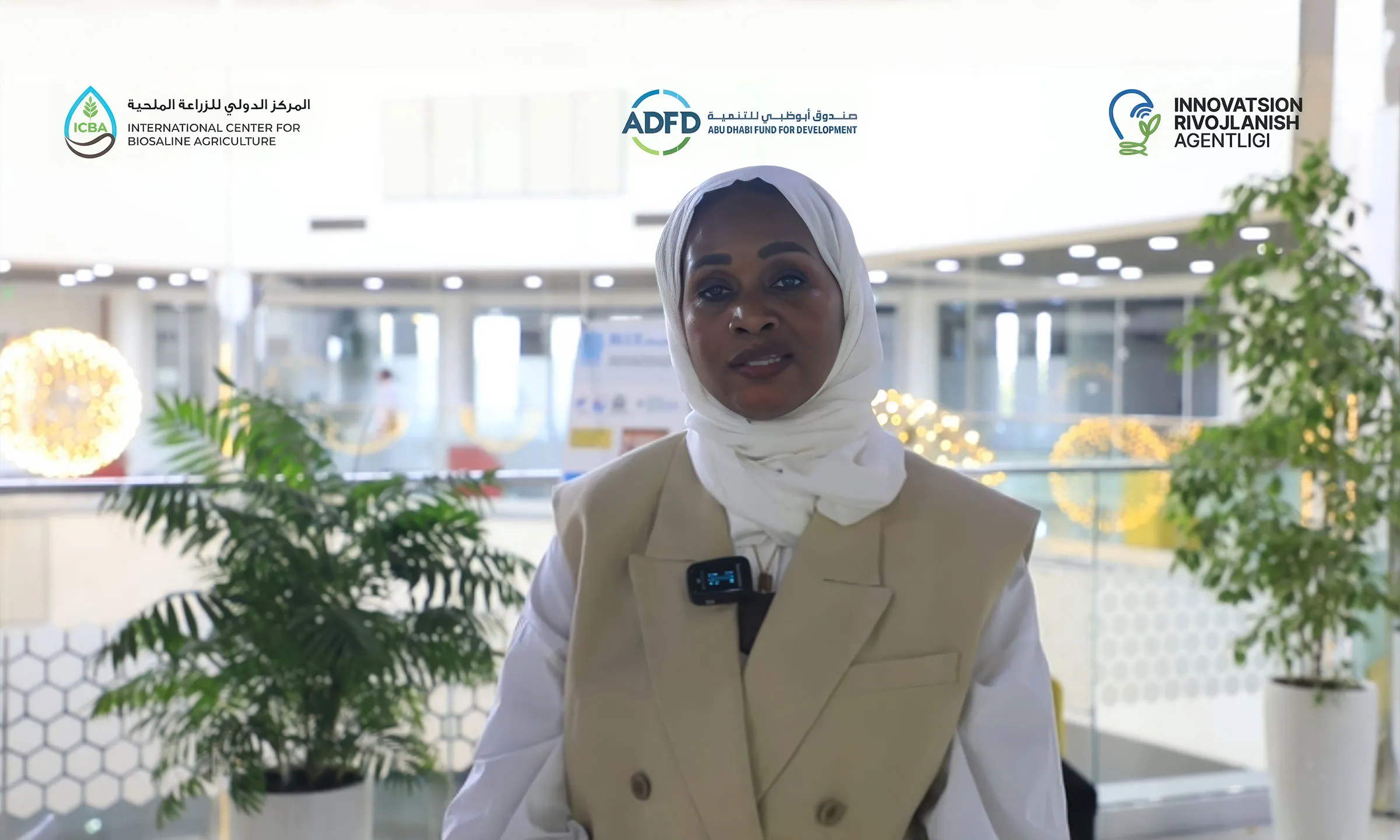
Designed by ICBA in collaboration with the Agency for Innovative Development, the Accelerator is supported under the project “Development of Sustainable Agricultural Production Systems in Degraded Areas of Karakalpakstan”, funded by the Abu Dhabi Fund for Development (ADFD).

Dr. Tarifa Alzaabi
Ahead of the launch of the Farmers’ and Agro-Entrepreneurs Accelerator in Karakalpakstan, the Agency for Innovative Development under the Ministry of Higher Education, Science and Innovation of the Republic of Uzbekistan spoke with Dr. Tarifa Alzaabi, Director General of the International Center for Biosaline Agriculture (ICBA), about the programme’s strategic purpose, its focus on value chain development and the opportunities it will create for farmers and agro-entrepreneurs.
Designed by ICBA in collaboration with the Agency for Innovative Development, the Accelerator is supported under the project “Development of Sustainable Agricultural Production Systems in Degraded Areas of Karakalpakstan”, funded by the Abu Dhabi Fund for Development (ADFD).
The programme will equip farmers and agro-entrepreneurs with practical knowledge and skills in developing value-added products, modern agribusiness management, agricultural product commercialisation and access to new markets.
— What is the strategic purpose behind establishing the Farmers’ and Agro-Entrepreneurs Accelerator?
This programme was designed based on the achievements and experience gained through our projects implemented in the Republic of Karakalpakstan with financial support from the Abu Dhabi Fund for Development. As we evaluated the results of these projects, it became clear that the next step was to take our support for farmers to a new level.
Through the Accelerator, participants will acquire modern knowledge and practical skills, learn how to apply them effectively in their daily work, and gain the experience needed to develop successful agricultural businesses. Our goal is to equip farmers and agro-entrepreneurs with the knowledge and practical competencies that will enable them to become more successful entrepreneurs and more productive farmers.
— Why have value chain development and the commercialisation of agricultural products become priorities at this stage?
We are committed to supporting farmers across the entire agricultural value chain. Our work follows the “Farm to Fork” approach, covering every stage from production and processing to market access and, ultimately, the delivery of products to consumers.
For this reason, we place particular emphasis on supporting farmers at every stage of the value chain, beginning with soil preparation and planting, continuing through cultivation and post-harvest processing, and concluding with bringing products to market. Our objective is to provide farmers with the knowledge and practical skills required at each stage.
— What role does ICBA play in implementing the programme?
Since the launch of our ADFD-funded project in Karakalpakstan, we have placed strong emphasis on providing comprehensive support to farmers.
This includes strengthening their knowledge of modern agronomic practices and technical skills, as well as enhancing their capabilities in marketing and agribusiness management.
Our mission is to help farmers fully understand the importance of the Farm to Fork approach while creating new opportunities for knowledge exchange, collaboration and stronger connections with markets.
By the completion of the five-year project, we expect participating farmers to possess the knowledge and practical experience needed to produce high-quality agricultural products and market them successfully in competitive markets.
— What opportunities do salt-tolerant and climate-resilient crops create for Karakalpakstan?
Given the environmental challenges associated with the Aral Sea crisis and climate change, it is essential to focus on climate-smart crops.
We have introduced drought- and salt-tolerant crop varieties into farming systems in Karakalpakstan. These crops enable more efficient use of water and other natural resources. They also offer high nutritional value and deliver additional benefits to the region’s agricultural sector and ecosystem.
— How will the success of the Accelerator be measured?
The programme’s success will be assessed against several key indicators.
First, we aim to engage 200 farmers from across Karakalpakstan. Particular attention will be given to attracting highly motivated participants, including women and young people, and ensuring their active participation in the programme.
Second, we will assess the market readiness of the products developed through the Accelerator, their commercialisation potential and their ability to generate additional value across the agricultural value chain.
We are confident that the outcomes of this initiative will make a meaningful contribution to advancing innovative and sustainable agriculture in Karakalpakstan, and we look forward to celebrating these achievements with all our partners and programme participants.