EAD and ICBA Complete UAE’s First Ghaf Tree Population Genomics Study
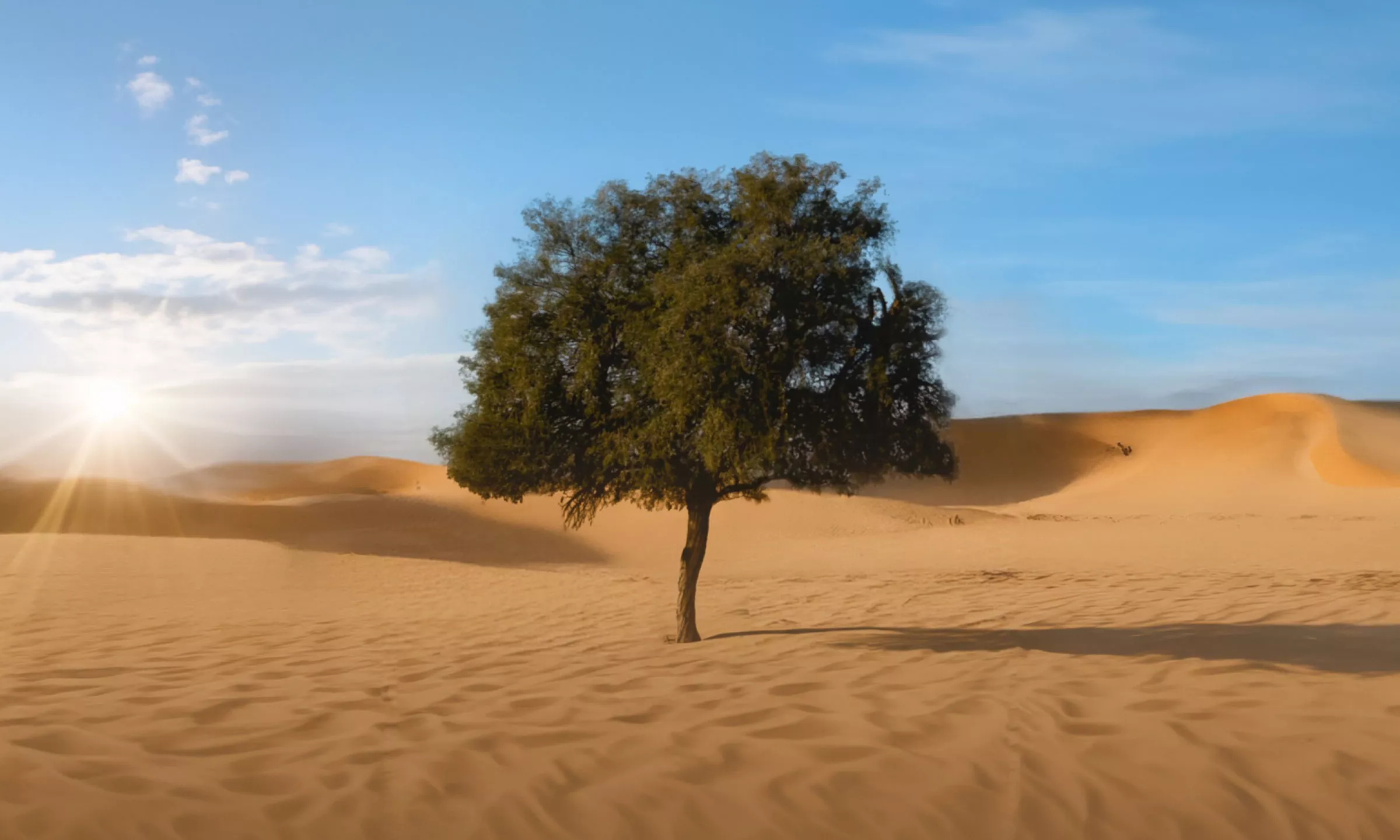
As the national tree of the United Arab Emirates, the Ghaf is revered for its ecological, cultural and symbolic value. It stabilises dunes, enriches soils and supports biodiversity in arid environments. Yet despite its importance, little was previously known about the species’ genetic variation or evolutionary history – until now.
As part of a pioneering scientific collaboration, the Environment Agency – Abu Dhabi (EAD) and the International Center for Biosaline Agriculture (ICBA) have completed the first-ever population genomics study of the Ghaf tree (Prosopis cineraria), revealing significant genetic insights critical for conserving this iconic desert species and supporting the development of climate-resilient ecosystems across the UAE.
As the national tree of the United Arab Emirates, the Ghaf is revered for its ecological, cultural and symbolic value. It stabilises dunes, enriches soils and supports biodiversity in arid environments. Yet despite its importance, little was previously known about the species’ genetic variation or evolutionary history – until now.
The study, based on whole-genome re-sequencing of Ghaf population collected from across the UAE, has uncovered four genetically distinct groups. One of these groups was found to be a genetically unique population which may represent evolutionary unique lineage.
The findings offer a wealth of data that will support prioritising and optimising seed banking of these unique populations, and support rehabilitation and restoration, including national initiatives like the Ghaf National Initiative. Moreover, the identification can be linked to environmental adaptation and stress response, providing valuable insight for guiding assisted gene migration and climate-smart restoration, especially in areas affected by desertification or salinity.
Two digital tools were also developed as part of this project: an interactive genomic map and a phylogenetic tree viewer. Phylogenetics provides a powerful model for visualising the evolutionary relationships among different populations of the Ghaf tree. By analysing heritable traits, researchers can trace the lineage of various Ghaf populations and uncover patterns of differentiation shaped by environmental pressures and geographic barriers. This approach offers an insight into how populations are related through shared ancestry. Understanding these relationships supports conservation efforts by identifying evolutionarily distinct groups and guiding strategies for genetic management and habitat restoration. These tools will help conservationists and decision-makers visualise the Ghaf’s genetic landscape and plan long-term conservation strategies rooted in evidence-based science.
Ahmed Al Hashmi, Executive Director of the Terrestrial and Marine Biodiversity Sector at EAD, commented on the significance of the findings: “The Ghaf tree is more than just a national symbol, it is a living example of resilience in the face of arid climate and environmental stress. Through this groundbreaking partnership with the International Center for Biosaline Agriculture we now have the genomic evidence needed to guide its long-term conservation. This research will empower us to implement targeted policies, prioritise genetically distinct populations and develop restoration efforts that are aligned with future climate conditions. It exemplifies how science can directly support national biodiversity goals and ensure a sustainable legacy for future generations.”
Dr. Tarifa Alzaabi, Director General of ICBA, said: “This landmark study reflects ICBA’s deep commitment to harnessing cutting-edge science in support of the protection and sustainable management of native biodiversity. The Ghaf tree carries profound ecological and cultural significance in the region, and by decoding its genetic blueprint, we are equipping policymakers and conservationists with the knowledge needed to ensure its preservation for generations to come. More than a scientific milestone, this research sets a precedent for how genomic tools can inform conservation strategies in arid and saline environments and strengthen long-term climate resilience.”
With the publication of the paper, EAD and ICBA are eager to share these insights as they continue to expand the scientific foundation for biodiversity stewardship in arid and semi-arid regions. This research not only marks a milestone for desert ecology in the Arabian Peninsula but also sets a precedent for integrating genomic science into national conservation planning.