ICBA Advances Strategic Partnerships and Project Implementation During Official Visit to Uzbekistan
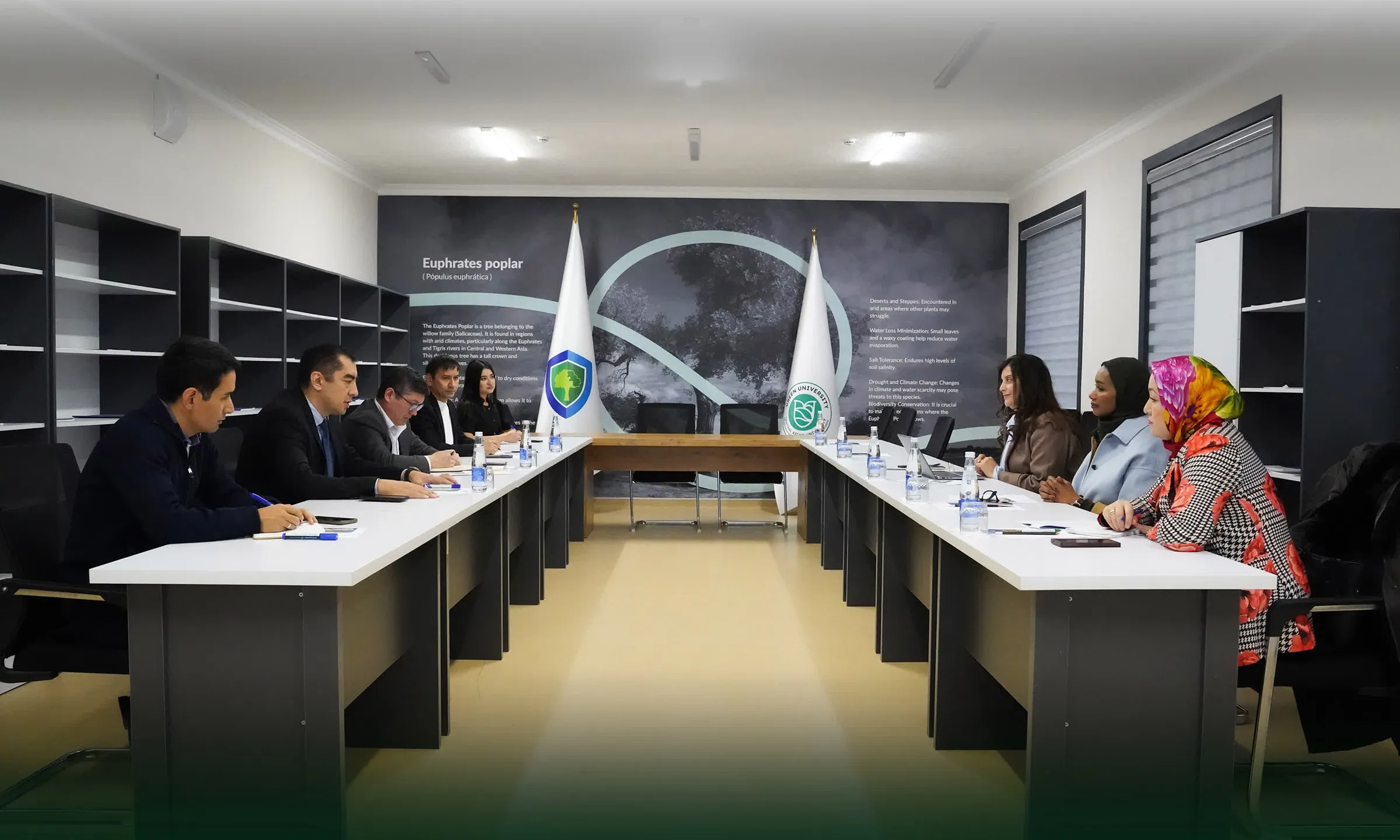
Technical discussions with Green University progress plans for a Spirulina laboratory to support IAAS sustainability in the Republic of Karakalpakstan.
High-level engagements reinforce collaboration on ecology, climate adaptation, and sustainable development priorities.
The International Center for Biosaline Agriculture (ICBA) conducted an official visit to Uzbekistan in December 2025 as part of its ongoing engagement in Central Asia, aimed at strengthening cooperation in sustainable agriculture, water and land management, climate resilience, education, and innovation. The visit comprised a series of high-level and technical meetings with government institutions and academic partners, building on ICBA’s existing project portfolio and long-term collaboration in the country.
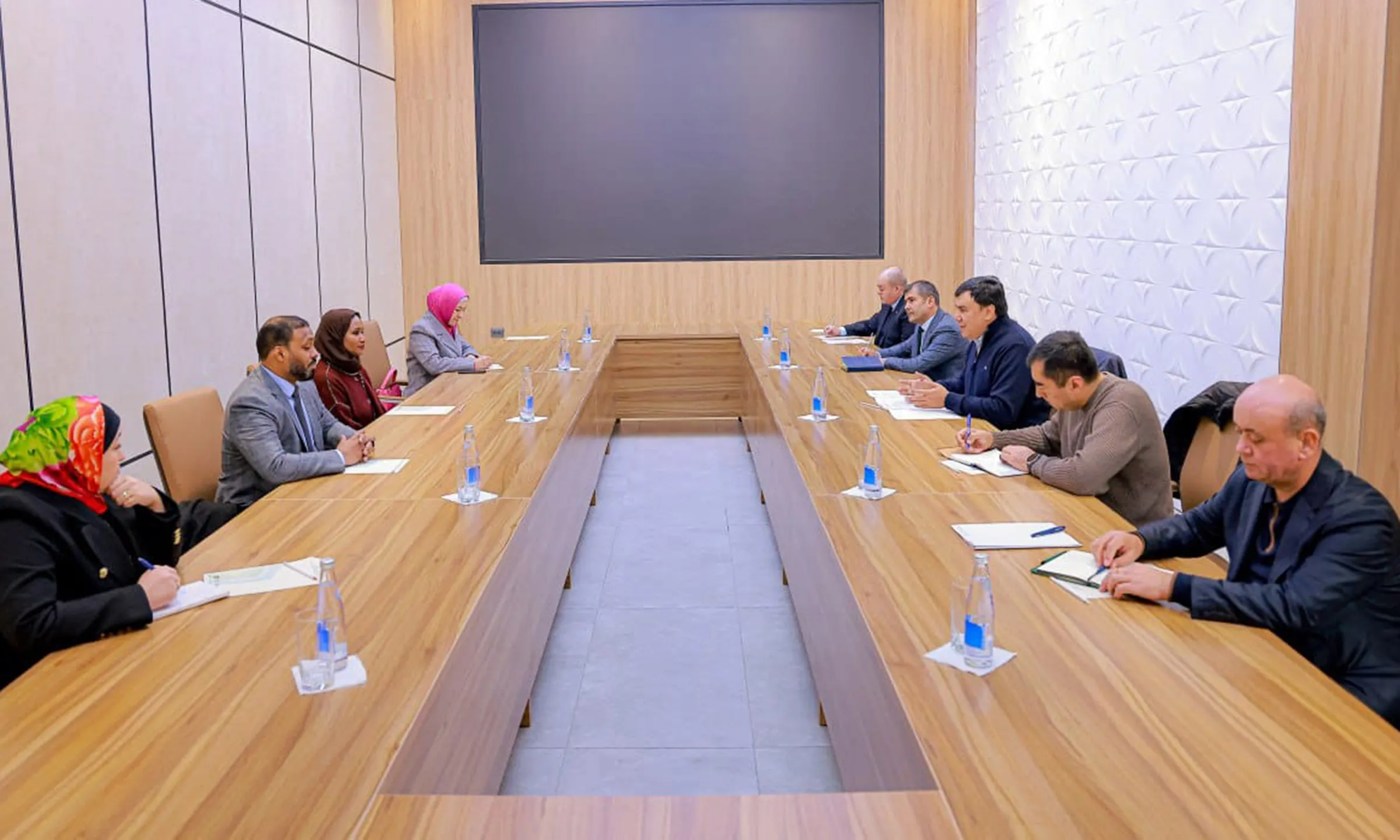
On Friday, 12 December 2025, Dr. Tarifa A. Al Zaabi, Director General of ICBA, held a high-level meeting with H.E. Mr. Aziz Abudakhlikov, Advisor to the President of the Republic of Uzbekistan on Ecology and Chairman of the National Committee on Ecology and Climate Change in the presence of His Excellency Mr. Mohammed Naseeb Al Dhaheri, Head of Economic, Political, and Media Affairs at the Embassy of the United Arab Emirates in Tashkent. The meeting focused on reviewing progress under ongoing cooperation and discussing next steps to further strengthen collaboration in support of national priorities related to ecology, climate adaptation, and sustainable development.
In her remarks, Dr. Tarifa A. Al Zaabi stated: “Uzbekistan is a key country of cooperation for ICBA in Central Asia, where the Center works with government institutions, national counterparts, and academic partners to advance shared priorities in climate resilience, water and land management, and sustainable agricultural development. In a context where water scarcity, land degradation, and climate variability continue to pose significant challenges, this visit provided a timely opportunity to review progress, align with national stakeholders, and strengthen coordination on practical initiatives that can be scaled. The focus remains on translating applied research into measurable outcomes that reinforce resilience, enhance resource efficiency, and contribute to sustainable development”.
The discussions built on ICBA’s ongoing projects and field-level engagement in Uzbekistan, particularly in the areas of climate-resilient agriculture, sustainable water and land management, and capacity development. The visit provided an opportunity to assess progress, strengthen institutional coordination, and explore pathways for scaling impact through applied research and innovation.
The visit also included a meeting with Mr. Shahriyor Nurulloyev, Vice-Rector of the Central Asian University of Environmental and Climate Change Studies (Green University), alongside Dr. Houda Chelaifa, Halophyte Agronomist at ICBA, and Dr. Marguba Rejapova, Post-Doctoral Research Fellow under the Central Asia and the Caucasus (CAC) Program to accelerate the collaboration agenda on advancing technical and academic collaboration, particularly discussions on the establishment of a Spirulina cultivation laboratory in Tashkent to strengthen research capacity and support the long-term sustainability of Integrated Agriculture–Aquaculture System (IAAS) activities in the Republic of Karakalpakstan.
Overall, the official visit reaffirmed ICBA’s long-term commitment to Uzbekistan and Central Asia and reinforced the value of sustained partnerships that connect policy dialogue, academic cooperation, and field-level implementation. The engagements underscored a shared commitment to science-based collaboration that supports national priorities and delivers practical solutions for climate resilience and sustainable development across saline- and climate-affected environments.