ICBA Hosts the Launch of Good Agricultural Practices as a Core Pillar of Red Palm Weevil Management
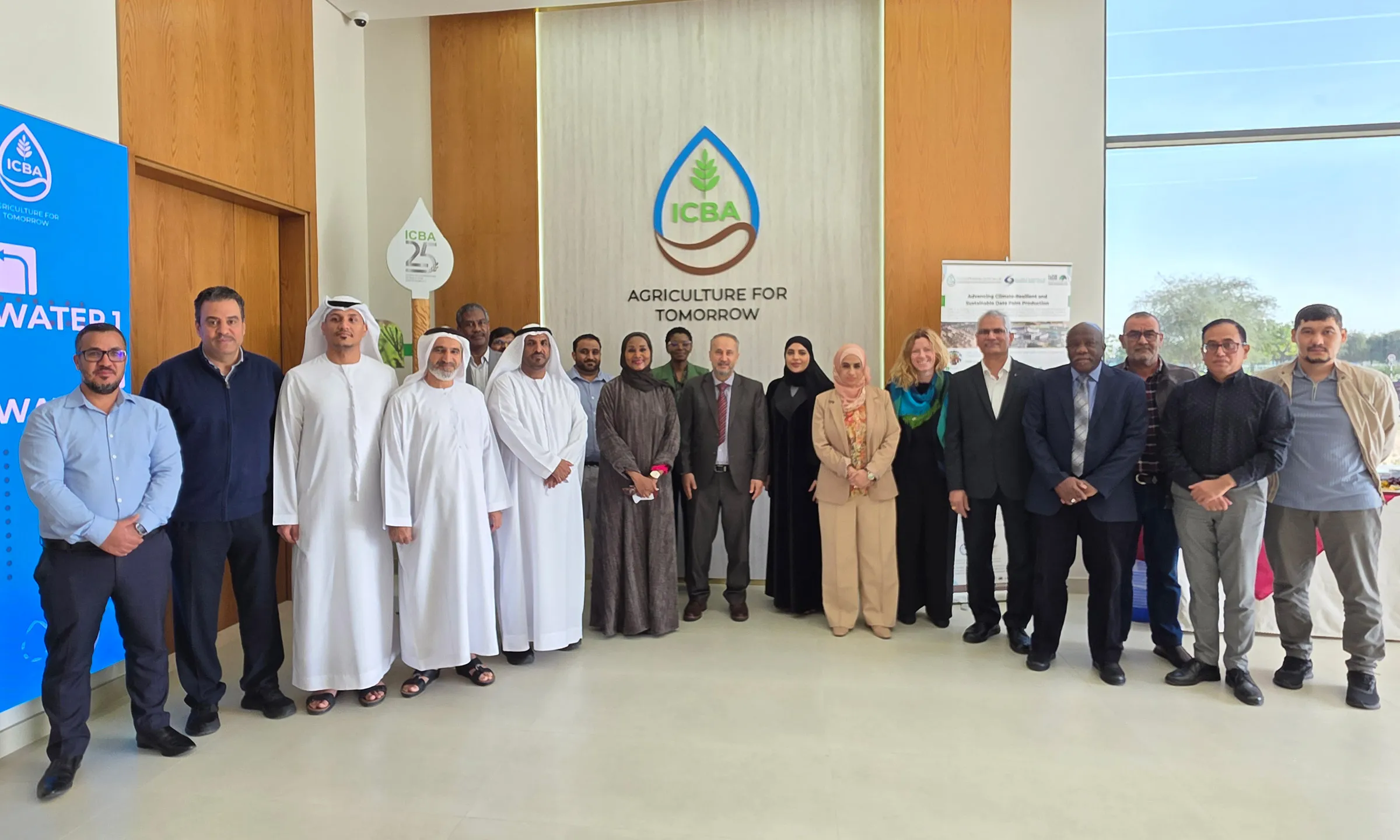
An Inception meeting brought together the Ministry of Climate Change and Environment, the International Center for Agricultural Research in the Dry Areas (ICARDA), the Abu Dhabi Agriculture and Food Safety Authority, and the International Center for Biosaline Agriculture (ICBA) to strengthen Good Agricultural Practices (GAP) for the sustainable management of the Red Palm Weevil within date palm production systems.
The International Center for Biosaline Agriculture (ICBA) convened a foundational partners’ meeting at its headquarters in Dubai to initiate work on Good Agricultural Practices (GAP) as a core pillar for the prevention and management of the Red Palm Weevil, under the International Consortium for Red Palm Weevil Control (C4RPWC) programme, supported by the Government of the United Arab Emirates and the Gates Foundation.
The Red Palm Weevil is among the most serious insect pests threatening date palm production systems and the livelihoods dependent on them across a number of countries worldwide. This challenge underscores the need to adopt integrated, science-based approaches that prioritize prevention, the health of production systems, and field-level application of Good Agricultural Practices.
The Consortium brings together a range of institutions implementing the programme through an applied, impact-driven approach, uniting international research centres, national authorities, and local partners to address the key gaps in managing this pest. The programme uses the United Arab Emirates as a testing and validation platform for innovations that are practical, scalable, and transferable to low- and middle-income countries affected by the Red Palm Weevil.
During the meeting in Dubai, representatives from the Ministry of Climate Change and Environment, the Abu Dhabi Agriculture and Food Safety Authority, and the International Center for Agricultural Research in the Dry Areas (ICARDA), joined ICBA experts and date palm farmers to align efforts around practical, evidence-based approaches. These approaches aim to enhance tree health, reduce susceptibility to infestation, and strengthen the resilience and sustainability of date palm production systems, while improving the effectiveness of integrated pest management in the United Arab Emirates, the Arab Republic of Egypt, and the Kingdom of Morocco, among other countries that may benefit from the programme’s outcomes.
Commenting on the launch, Dr Tarifa A. Al Zaabi, Director General of the International Center for Biosaline Agriculture, said: “Managing the Red Palm Weevil cannot rely on isolated solutions or short-term responses. Good Agricultural Practices provide the scientific foundation for any sustainable approach to addressing this challenge. By strengthening the health of date palm trees, improving field management, and supporting informed day-to-day farming decisions, we address the underlying factors that increase susceptibility to infestation. Through ICBA’s contribution to this consortium, and in close collaboration with our partners, we are working to establish a coordinated, evidence-based approach that places prevention, production system resilience, and long-term sustainability at the heart of efforts to protect date palm systems and the livelihoods that depend on them.”
During the meeting, representatives from the Ministry of Climate Change and Environment, the Abu Dhabi Agriculture and Food Safety Authority, and ICARDA, alongside ICBA experts and date palm farmers, aligned on practical, evidence based approaches that strengthen palm health, reduce susceptibility to infestation, and support more effective Integrated Pest Management (IPM) in the United Arab Emirates, the Arab Republic of Egypt, and the Kingdom of Morocco, with outcomes expected to extend to other countries as the program progresses.
With more than 25 years of applied research experience in date palm systems, ICBA contributes long standing scientific and field expertise to the consortium’s work, supporting the translation of research into practical guidance and solutions that respond to real challenges faced by farmers and land managers.
Through C4RPWC, partners are demonstrating how collaboration, applied science, and field validated practices can protect date palms, safeguard livelihoods, and strengthen agricultural resilience across regions affected by the Red Palm Weevil.