MOCCAE and ICBA Launch ‘National Agricultural Initiative for the Adoption of Climate-Smart Crops in the UAE’
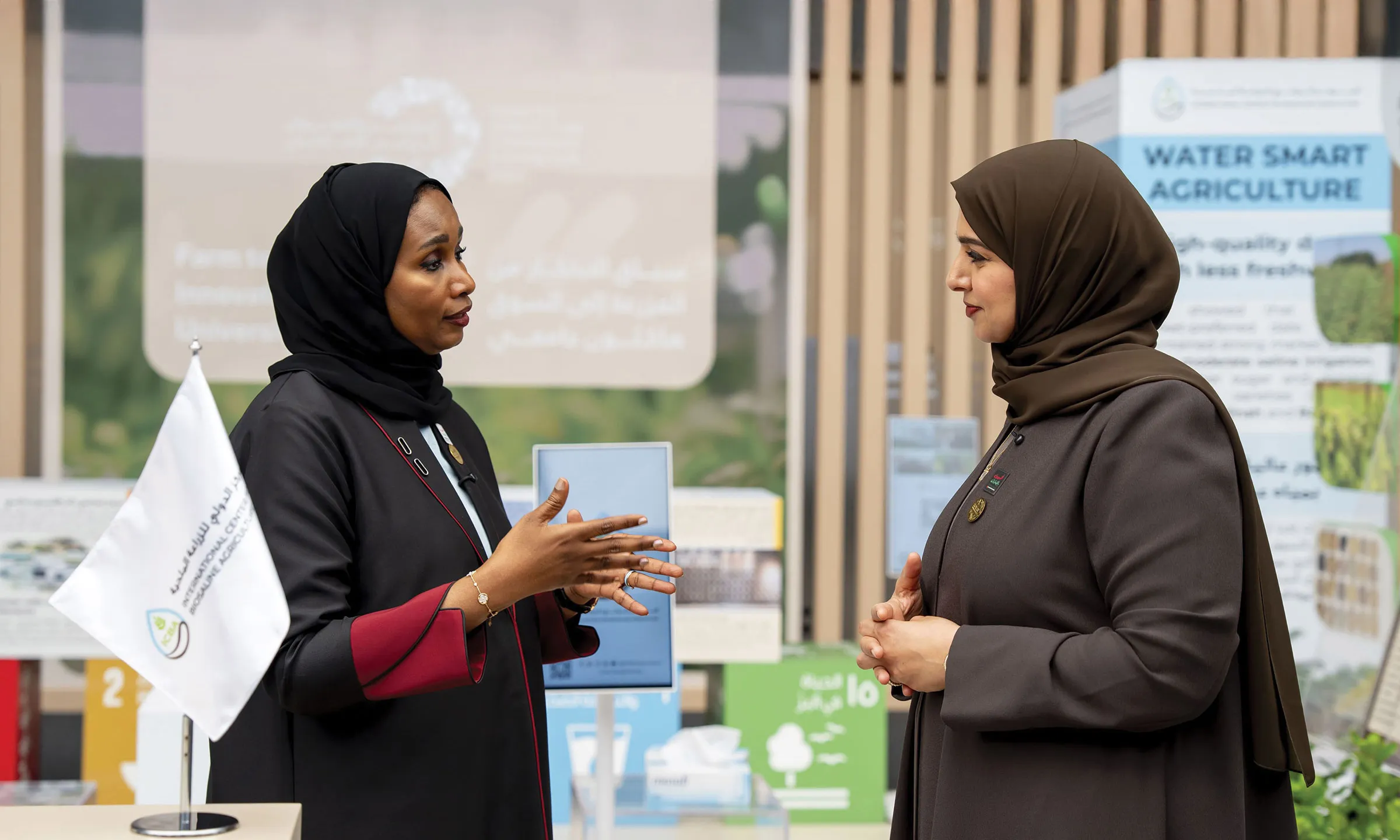
On the sidelines of the second Emirates Agriculture Conference and Exhibition in Al Ain, the Ministry of Climate Change and Environment (MOCCAE) and the International Centre for Biosaline Agriculture (ICBA) officially launched the National Agricultural Initiative for the Adoption of Climate-Smart Crops in the UAE.
On the sidelines of the second Emirates Agriculture Conference and Exhibition in Al Ain, the Ministry of Climate Change and Environment (MOCCAE) and the International Centre for Biosaline Agriculture (ICBA) officially launched the National Agricultural Initiative for the Adoption of Climate-Smart Crops in the UAE.
This strategic step aims to solidify the UAE's position as a leading global model in climate-adaptive agriculture. By transforming scientific research outcomes into field solutions, the initiative ensures the sustainability of water resources and achieves national food sovereignty, aligning with the National Food Security Strategy 2051.
Driven by its core strategic pillars, the initiative aims to diversify the national food basket, reduce dependence on imports, improve self-sufficiency in both food and fodder production, while building a resilient and sustainable ecosystem for local production.
A strategic vision for a sustainable food ecosystem
Her Excellency Dr Amna bint Abdullah Al Dahak, Minister of Climate Change and Environment, defined this initiative as a major shift in the approach to national agricultural production, placing food security at the very top of the agenda.
"We are establishing a new phase of food sovereignty built on knowledge and innovation," Her Excellency said. "Through this initiative, we aim to implement climate-smart solutions tailored to the UAE’s unique environmental conditions, ensuring the development of a resilient food system that can tackle global challenges and fulfill the aspirations of future generations for a secure and sustainable future.”
Her Excellency highlighted that transitioning to climate-smart crops is the most effective and sustainable investment, particularly given the UAE’s desert climate and water scarcity. “This initiative plays a key role in improving the quality of our farm yields and equipping our Emirati farmers and agricultural professionals with the skills to adopt innovative practices that deliver maximum economic returns with the lowest environmental footprint,” Her Excellency stated.
“We believe that our investment in agricultural innovation is an investment in the nation’s sustainability. By cultivating these crops in our Emirati soil, we are setting a global example of how technology and scientific research can be harnessed to achieve our food security goals in the face of challenging climate conditions,” Her Excellency added.
For her part, Her Excellency Dr. Tarifa Alzaabi, Director General of the International Center for Biosaline Agriculture (ICBA), commended the launch of this national initiative, affirming that it reflects an advanced model of integration between government vision, specialized research expertise, and field application.
Her Excellency Dr. Tarifa Alzaabi said: “This initiative represents an important milestone in translating scientific knowledge into practical agricultural and food solutions. It builds on more than 25 years of research led by ICBA in developing and testing crops capable of adapting to salinity, high temperatures, and water scarcity. Through this partnership, ICBA contributes to transferring this scientific legacy from laboratories and field trials to farmers’ fields and food value chains, bringing agricultural innovation closer to the needs of producers and consumers, while supporting the integration of climate-smart crops into a more diverse and sustainable food system in the UAE.”
Crops shaping the future of agricultural production
At its core, the initiative relies on four strategic crops adapted to the UAE environment. Foxtail millet, Proso millet, and Sorghum offer a practical solution to water scarcity, consuming up to 50 per cent less water than traditional grains while maintaining high productivity in extreme temperatures above 45°C. These grains are also rich in fibre, packed with minerals, and naturally gluten-free, making them ideal for modern consumers who are seeking healthy and sustainable food options.
To integrate these ingredients into the local diet, a specialised 'Emirati Recipe Book' will guide families and restaurants in using these crops with a traditional touch.
"These crops, with their distinctive qualities, may appear to be an unconventional addition to our traditional food system, however, we place great confidence in the awareness and adaptability of our authentic Emirati society to evolve its food heritage by embracing everything new and sustainable. This is the proactive approach championed by our wise leadership across all facets of life,” remarked Her Excellency Dr. Al Dhahak. “As we progress, we adopt what aligns with our values and supports our goals. Enhancing Emirati food heritage with innovative crops is critical to strengthening our climate resilience and ensuring the sustainability of our resources, so that our tables remain abundant today and in the future.”
For the livestock sector, Blue Panicum grass provides an innovative solution for high-quality fodder significantly less freshwater consumption. Renowned for its exceptional tolerance to high salinity and drought, it can be cultivated in saline-affected lands using unconventional water sources.
Beyond driving local agricultural productivity, this integrated crop-livestock system is designed to balance sectoral growth with fresh groundwater conservation, paving the way for a robust, sustainable, and climate-smart agricultural economy in the UAE.
Field Roadmap: From Research to Harvest
The initiative follows a two-phase roadmap. In 2026, 45 applied field trials each spanning 1,000 square meters will be established on farms across the country to assess crop adaptability to local soil conditions and evaluate drip irrigation efficiency in reducing water usage. Alongside this, 45 Emirati farmers will be trained and 50 agricultural extension officers qualified through a “Train the Trainer” programme, ensuring sustained knowledge transfer and broader dissemination of expertise among local producers. The second phase in 2027 will focus on commercial expansion and establishing private-sector partnerships to scale distribution and open access to local and international markets.
Broad National Alliance for Sustainable Food Security
The initiative is a great example of a public-private partnership. It is backed by a broad national alliance led by MOCCAE and ICBA, supported by the Abu Dhabi Agriculture and Food Safety Authority (ADAFSA), Emirates Development Bank, Silal and ADQ.
The alliance also includes leading retailers such as Carrefour, Lulu, and Spinneys, enhancing value chains and improving market access. In addition, restaurants like BOCA and Healthy Farm will feature climate-smart crops on their menus, promoting a sustainable food culture among consumers.
Together, these partners serve as the driving force behind the initiative’s goal to establish a sustainable green economy and position the UAE as a global leader in providing practical, holistic solutions to food security challenges in the face of climate change.
“Resilience”: A Prototype Model for Food Products Derived from Climate-Smart Crops
In a pioneering step aimed at translating scientific outputs into tangible applications that resonate with consumers’ daily lives, the initiative introduced “Resilience” as an initial prototype model for innovative food products based on climate-smart crops in the UAE. This prototype model builds on a scientific legacy spanning more than 25 years of specialized research in arid and saline environments, highlighting the potential of these crops as sustainable and scalable agricultural and food solutions.
Her Excellency Dr. Tarifa Alzaabi added: “This prototype model adds an applied dimension to the initiative by exploring new pathways for using climate-smart crops in food applications that are closer to the needs of society. Its value lies in linking agricultural research with the potential food uses of these crops, through a gradual pathway that supports the initiative’s objectives and strengthens opportunities to develop scalable solutions in collaboration with partners.”
The visual design of “Resilience” draws inspiration from the shape of a droplet, symbolizing the balanced relationship between water and soil, while its flowing lines reflect resilience, continuity, and the ability to thrive in challenging environments. Under the slogan, “From our climate-smart crops… the resilience of our food blossoms,” this prototype model presents an applied example of how the seeds of scientific research can be translated into healthy, sustainable, value-added food products, strengthening the presence of climate-smart crops in everyday life and supporting the UAE’s sustainable food security ambitions.