World Nature Conservation Day 2025: Safeguarding Resources, Sustaining Resilience
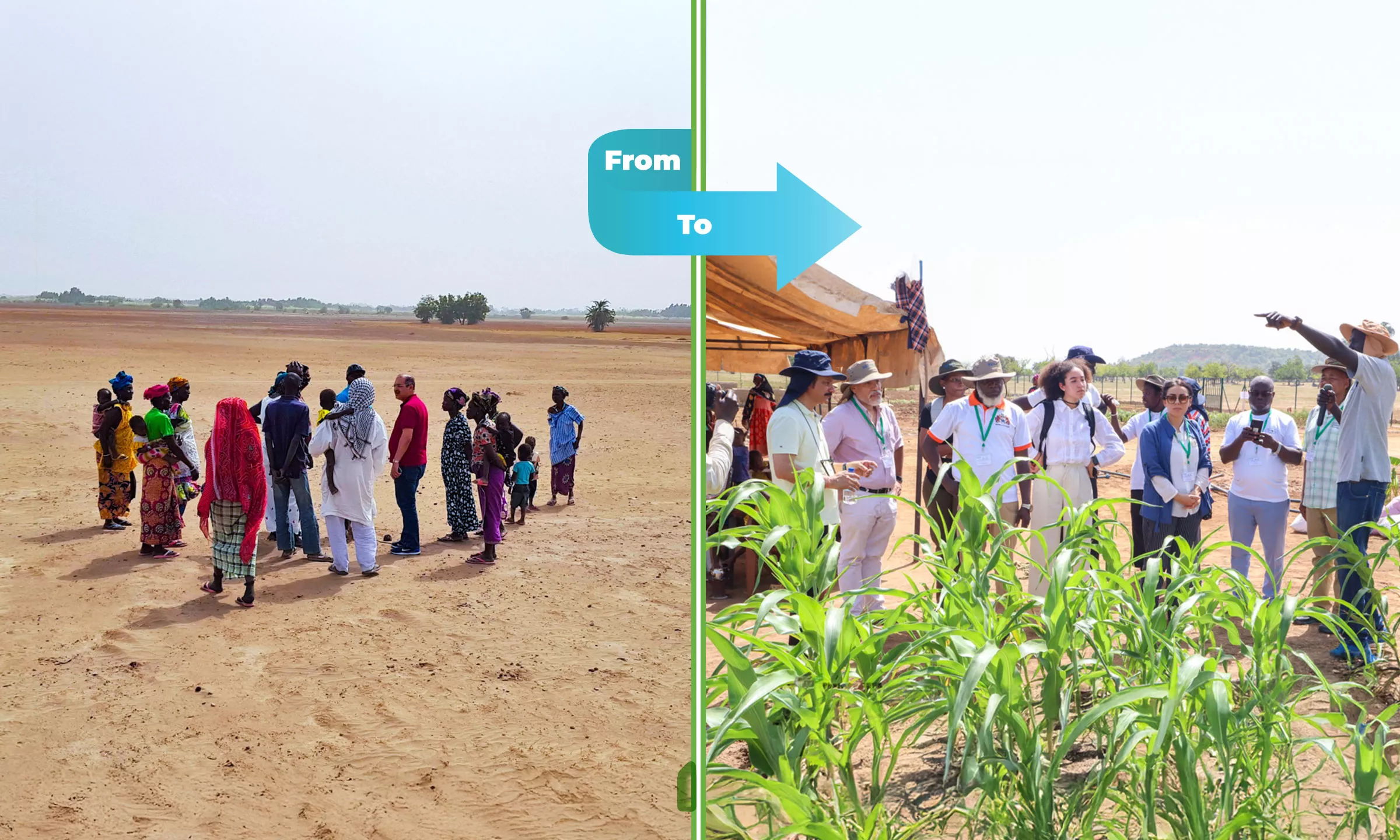
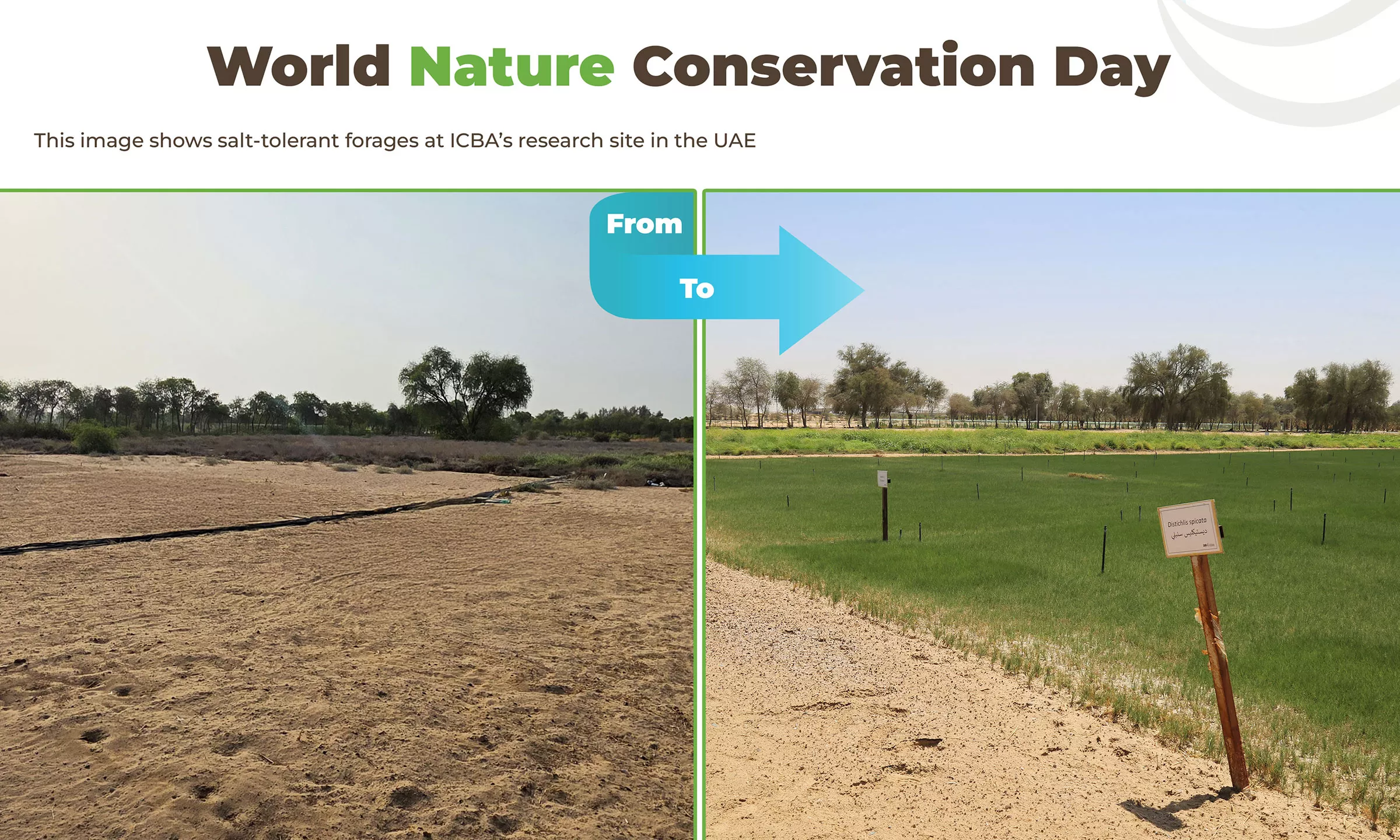
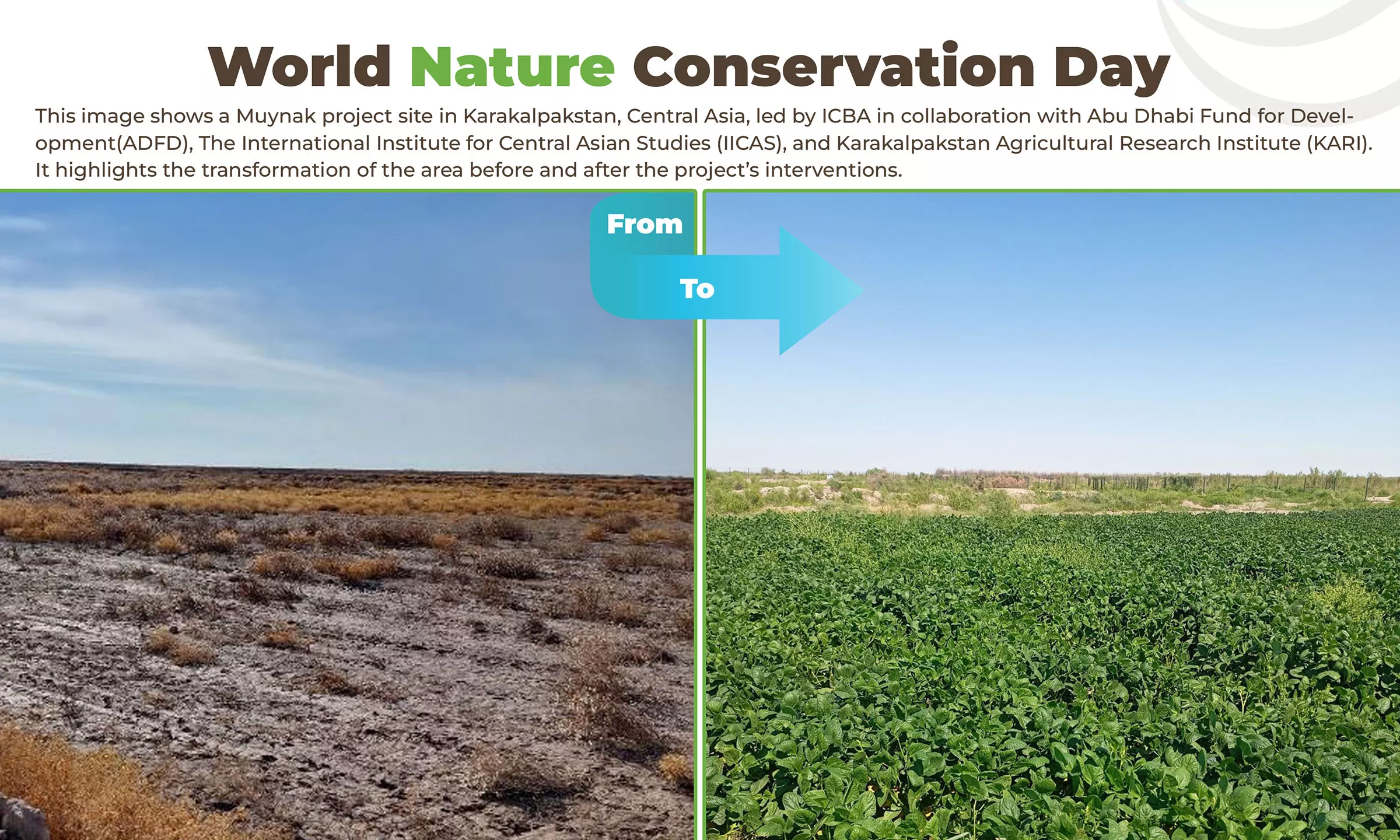
At the International Center for Biosaline Agriculture (ICBA), this commitment guides every area of our work. Whether restoring degraded lands, enhancing water use efficiency, or conserving crops’ biodiversity, we focus on supporting communities living in the world’s most resource-challenged saline, arid and water scarce environments.
ICBA’s work is grounded in the realities of saline areas, drylands and coastal zones, where the natural balance is delicate and disruptions can have lasting effects. In these regions, soil is prone to degradation and salinization, freshwater is limited, and ecosystems are under ever increasing pressure. Addressing these challenges requires science-based innovations that respect both ecological limits and local knowledge.
Conservation of natural resources is no longer a passive goal—it is integral to building resilient systems that serve both people and the environment. At ICBA, this means rethinking how biosaline agriculture, policy advocacy, education, and community engagement intersect with natural resources protection.
Nature is the foundation of life. It determines how we grow food, secure water, sustain soil health, maintain biodiversity, and adapt to a changing climate. On World Nature Conservation Day, we recognize the profound value of protecting natural ecosystems—especially as environmental stress continues to rise in many parts of the world.
At the International Center for Biosaline Agriculture (ICBA), this commitment guides every area of our work. Whether restoring degraded lands, enhancing water use efficiency, or conserving crops’ biodiversity, we focus on supporting communities living in the world’s most resource-challenged saline, arid and water scarce environments.
Global Nature in Troubled Times
The planet’s natural ecosystems are under immense pressure. An estimated 30% of Earth’s land—over 3.2 billion hectares—is already degraded, severely impacting ecosystems and the livelihoods they support. Drylands now cover approximately 41% of the planet’s terrestrial surface, providing a home and livelihood for more than 2 billion people, yet they are increasingly threatened by advancing aridity and climate extremes. Nearly 1.4 billion hectares, that is 10.7% of the world’s land area, are affected by salinity. Despite global conservation efforts, only 17.6% of terrestrial and inland water ecosystems and 8.4% of marine areas are formally protected. About 2.2 billion people lack access to safely managed drinking water, and about another 2.7 billion are experiencing water scarcity for at least one month each year. Moreover, around 50% of the world’s rangelands are degraded, placing additional stress on food production systems and pastoral livelihoods across multiple continents. These figures underscore the urgent need for science-based interventions to restore land, secure biodiversity, and strengthen the resilience of ecosystems in the face of accelerating environmental change.
Working with Fragile Ecosystems
ICBA’s work is grounded in the realities of saline areas, drylands and coastal zones, where the natural balance is delicate and disruptions can have lasting effects. In these regions, soil is prone to degradation and salinization, freshwater is limited, and ecosystems are under ever increasing pressure. Addressing these challenges requires science-based innovations that respect both ecological limits and local knowledge.
Through applied research and strategic partnerships, ICBA develops climate-smart approaches and technologies tailored to these conditions. From salt-tolerant and climate resilient crops to sustainable irrigation techniques, our goal is to enable agricultural productivity without exhausting natural systems.
Focus Areas in Nature Conservation
On this occasion, we highlight three areas where ICBA is actively contributing to the conservation of natural resources:
Protects Soil Health: ICBA supports integrated soil fertility management options to maintain productive soils in MENA, SSA and Central Asia, in the best possible manner. Promotes soil awareness through initiatives like the Emirates Soil Museum and a regional blueprint for soil museums. These programs introduce stakeholders to the role of soil in sustaining agriculture, ecosystems, and food security—building a foundation for better land stewardship across the region.
Water Sustainability: With growing pressure on freshwater resources, ICBA works to improve the use of saline, brackish, and treated wastewater in agriculture. This helps extend the life of freshwater reserves while maintaining productive landscapes. Similarly, efficient and integrated water management tools and technologies help to enhance water productivity in water-scarce environments.
Biodiverse Seed Conservation: ICBA’s genebank houses 17,632 germplasm accessions from heat-, salt-, and drought-tolerant crops and ecologically important plant species. In March 2025, ICBA deposited 315 seed samples from 110 resilient species into the Svalbard Global Seed Vault in Norway. The collection includes ghaf tree- the national tree of UAE, sea purslane, and other crops with high potential for dry regions. This step secures long-term safe duplicate storage and access to genetic resources vital for adapting agriculture to future conditions.
Shaping a Regenerative Future
Conservation of natural resources is no longer a passive goal—it is integral to building resilient systems that serve both people and the environment. At ICBA, this means rethinking how biosaline agriculture, policy advocacy, education, and community engagement intersect with natural resources protection.
We work with a wide range of partners across disciplines to integrate sustainability into every level of practice—from field trials and national strategies to capacity building and curriculum development. Regeneration begins when institutions and individuals are empowered to act, and when scientific knowledge becomes a driver of local resilience.
Looking Ahead
As we observe World Nature Conservation Day, ICBA reaffirms its mission to create science-driven, context-specific crop-soil-water solutions that protect the planet’s natural resources and empower communities. Every restored landscape, conserved seed, and informed decision is a step toward a future rooted in balance and responsibility.