ICBA and IWMI to strengthen global collaboration on water security and climate-resilient agriculture
The partnership positions ICBA and IWMI to jointly mobilize expertise, resources, and scientific evidence to support countries facing tightening water budgets, rising temperatures, and complex food system vulnerabilities. It also creates new pathways for collaborative innovation, policy engagement, and research investments designed to generate meaningful, scalable impact over the coming decade.
The International Center for Biosaline Agriculture (ICBA) and the International Water Management Institute (IWMI) have signed a strategic Memorandum of Understanding (MoU) to advance scientific collaboration in sustainable water management and climate-resilient agriculture.
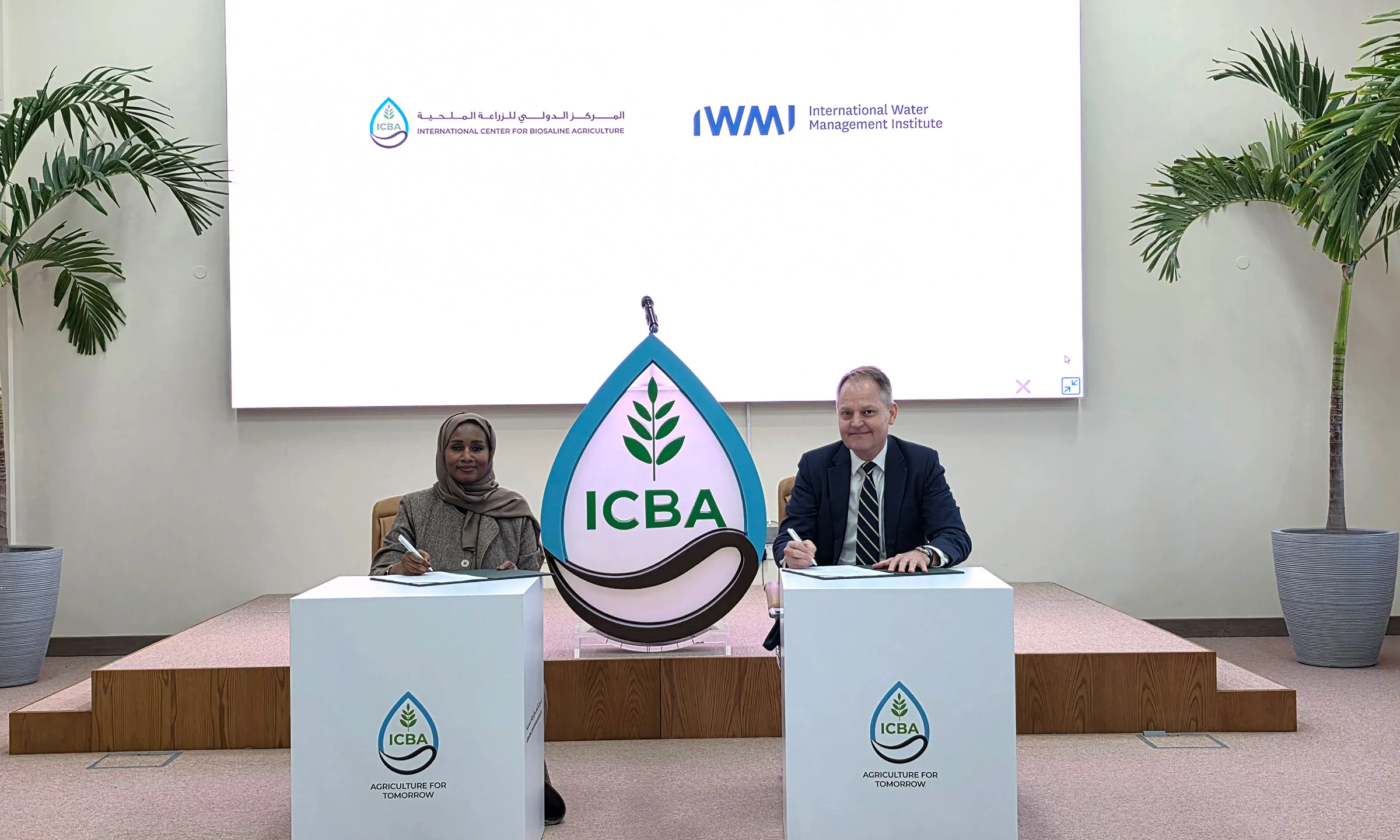
The International Center for Biosaline Agriculture (ICBA) and the International Water Management Institute (IWMI) have signed a strategic Memorandum of Understanding (MoU) to advance scientific collaboration in sustainable water management and climate-resilient agriculture. The agreement between the two research centers comes at a time when global water scarcity and food security challenges are intensifying. The MoU was signed by Dr. Tarifa A. Al Zaabi, Director General of ICBA, and Dr. Mark Smith, Director General of IWMI, during an official delegation visit to ICBA’s headquarters in Dubai. The agreement establishes a three-year cooperation framework focused on joint research, knowledge exchange, capacity development, and integrated solutions to strengthen the resilience of water and food systems in arid and saline environments facing climate risks.
“This partnership comes at a time when more than two billion people live in countries experiencing high water stress, and climate-related disruptions to food systems are becoming more frequent and severe,” Dr. Al Zaabi said. “By combining ICBA’s applied research strengths with IWMI’s global leadership in water management, we aim to accelerate the development of solutions that support countries navigating these converging pressures. This collaboration is not only timely — it is essential for building a more secure and climate-resilient future.”
“ICBA and IWMI bring capabilities that are critical for future food security and water security in the driest regions of Africa, MENA and Central Asia, where vulnerability to climate change is highest,” Dr. Smith said. “Both organizations are driven by applying science and innovation to sustainable development. This MoU reflects our shared recognition that by working together, we will be more successful in meeting the expectations of our partners and stakeholders.”
The collaboration builds on mutual priorities at a moment when the Middle East and North Africa region is warming at nearly twice the global average, with 2024 identified by the World Meteorological Organization as the region’s hottest year on record — a trend that continues to exacerbate water scarcity and pressure on food systems. According to the Food and Agriculture Organization of the United Nations (FAO), agriculture accounts for roughly 70% of all freshwater withdrawals worldwide, underscoring the urgency of improving water efficiency and advancing climate-resilient production systems.
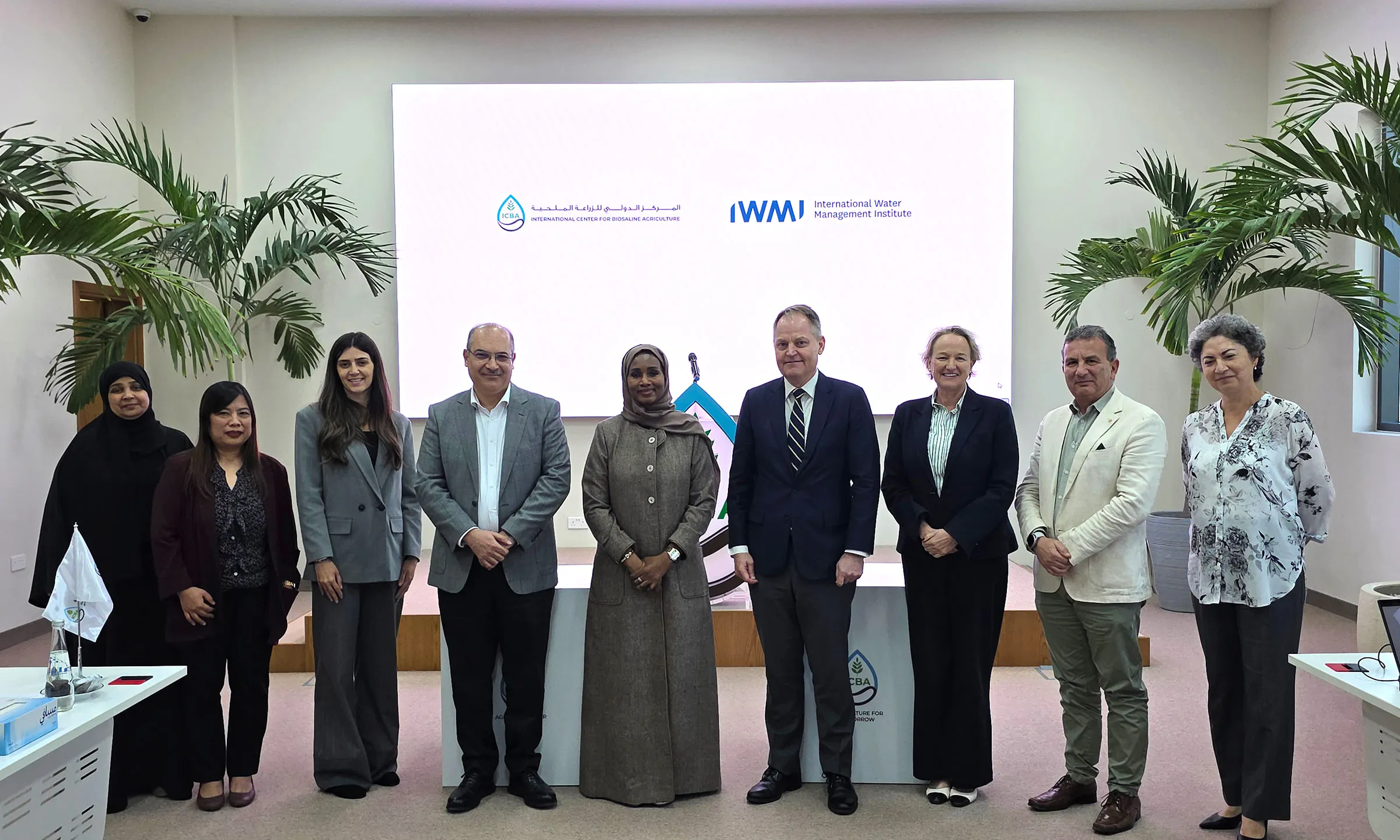
As part of the official visit, the IWMI delegation — headed by Smith and Rachael McDonnell, Deputy Director General — toured ICBA’s research facilities, gaining insight into ongoing work in digital agriculture, saline water irrigation systems, climate-resilient crop research, and soil health innovations. Both teams also discussed strategic water initiatives for the United Arab Emirates (UAE) and globally, including opportunities for digital water analytics, drought preparedness planning, and data-driven decision-support tools for national water and food security programs.
The partnership positions ICBA and IWMI to jointly mobilize expertise, resources, and scientific evidence to support countries facing tightening water budgets, rising temperatures, and complex food system vulnerabilities. It also creates new pathways for collaborative innovation, policy engagement, and research investments designed to generate meaningful, scalable impact over the coming decade.