At United Nations General Assembly Meetings in New York, ICBA Strengthens Its Role in Moving Agricultural Solutions from Research to Scale and Impact
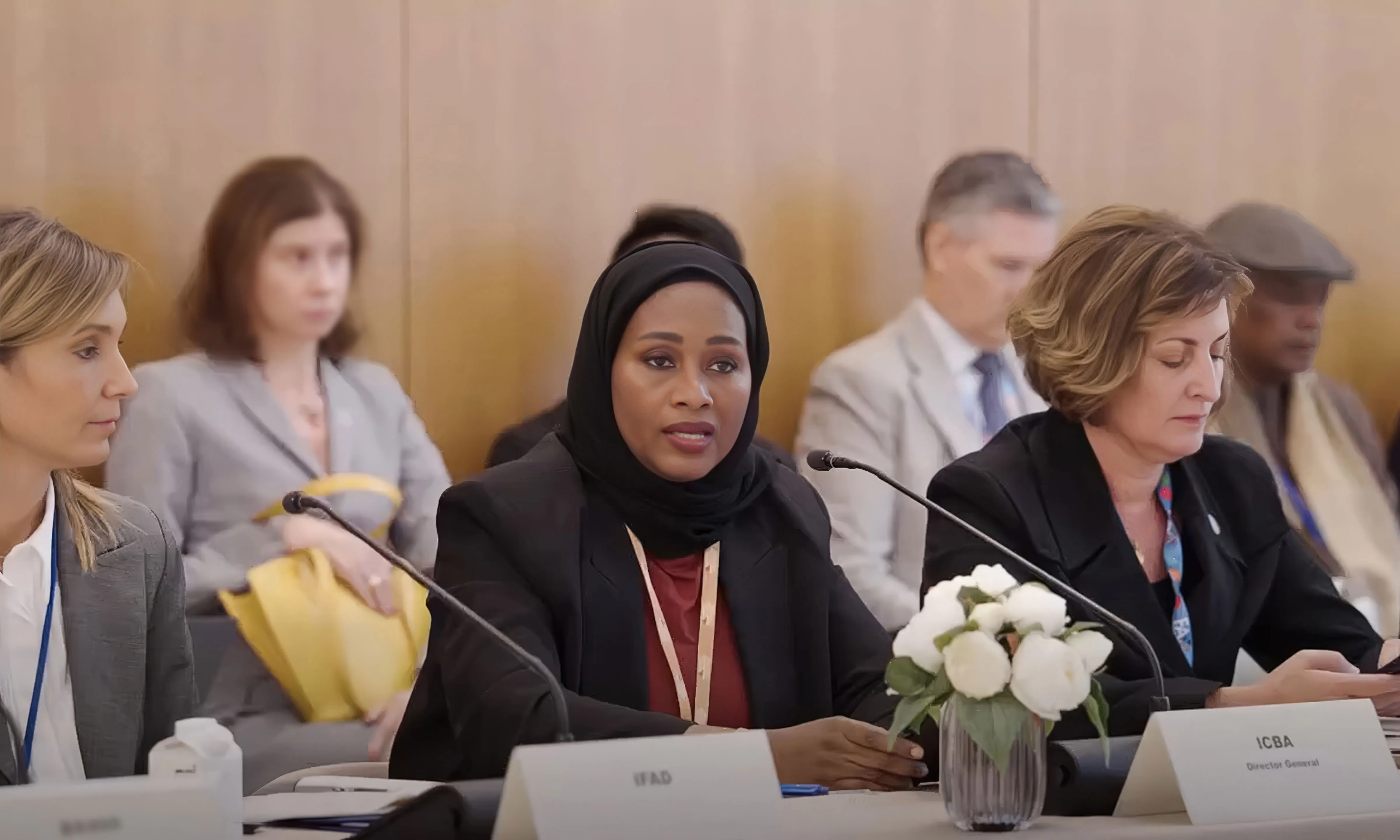
Dr. Tarifa Alzaabi, Director General of ICBA, represented the Centre through an intervention in the ministerial dialogue on water-secure agriculture and moderated the ministerial dialogue on strengthening the resilience of food systems and critical supply chains.
The International Center for Biosaline Agriculture (ICBA) emphasised the importance of accelerating the transition of proven agricultural solutions from research and trials to wider implementation during its participation in meetings of the 81st session of the United Nations General Assembly in New York. Its contribution focused on connecting science with national priorities, policies, capacity and financing.
ICBA participated as part of the Ministry of Climate Change and Environment (MOCCAE) delegation in two high-level ministerial dialogues chaired by H.E. Dr. Amna bint Abdullah Al Dahak, Minister of Climate Change and Environment, with government officials and representatives of international organisations and development and financing institutions.
Dr. Tarifa Alzaabi, Director General of ICBA, represented the Centre through an intervention in the ministerial dialogue on water-secure agriculture and moderated the ministerial dialogue on strengthening the resilience of food systems and critical supply chains.
During the first dialogue, Dr. Alzaabi focused on the role of scientific and technical institutions in helping countries move from research and pilot projects to national implementation. She emphasised the importance of designing for scale from the outset and aligning solutions with country needs, local capacity and financing.
She said: “The true value of scientific research is realised when proven solutions deliver tangible impact. We must therefore design for scale from the outset, connect science with policies, capacity and financing, and build the partnerships that take solutions from trials to implementation.”
In the second dialogue, Dr. Alzaabi moderated discussions on moving from responding to shocks towards building resilience and strengthening the preparedness of food systems and supply chains for climate and economic challenges and regional disruptions. Discussions covered diversifying supply sources, improving data sharing and early-warning tools, and connecting national priorities with technical expertise and appropriate financing.
ICBA’s participation in the two dialogues reflects its role as a scientific and development partner working to translate knowledge into solutions that can be implemented and scaled. This work draws on its expertise in salinity, water scarcity, land degradation, crops adapted to challenging climatic and environmental conditions, seed systems and capacity development. Through partnerships with governments and development and financing institutions, the Centre seeks to support wider application of these solutions, strengthening the sustainability and resilience of agricultural and food systems while contributing to food and water security and improved livelihoods.